
On a Thursday morning in March, Alyssa Kaplan watched SMCI surge 40% in pre-market. By 9:35 AM, she'd bought $8,000 worth of weekly calls. By noon, she'd lost $5,400.
She knew it was risky. She even told herself, "Don't chase it." But as she watched the stock climb — $800, $850, $900, $920 — while her Twitter feed exploded with screenshots of unrealized gains, something snapped.
The rational part of her brain said, "Wait for a pullback." The emotional part said, "If you wait, you'll miss the biggest trade of the year."
She bought calls at 9:35 AM, near the top of the morning spike. SMCI peaked at 9:42 AM. By 10:15 AM, it was down 12% from the high. By noon, her weekly calls had lost 68% of their value.
She held, hoping for an afternoon bounce. There wasn't one. She sold at 3:30 PM for a $5,400 loss.
"I knew better," she said. "I literally said out loud, 'Don't do this.' And then I did it anyway."
She didn't buy because of analysis. She bought because she couldn't stand watching everyone else make money.
This wasn't the first time. Over the previous four months, Alyssa had chased five different "momentum plays" — DJT, RIVN, MARA, COIN, and now SMCI. She'd lost money on every single one. Total FOMO losses: $17,200.
Source: Barber, Lee, Liu, Odean — "The Cross-Section of Speculator Skill" | Journal of Behavioral Finance — "FOMO and Retail Trading"
FOMO Is Not a Character Flaw. It's a Neurological Hijacking.
Here's what's actually happening in your brain when you see a stock running:
Your ventral striatum — the part of your brain associated with reward anticipation — activates. Dopamine floods your system. The same neurotransmitter that fires when you're about to eat your favorite food, win a game, or get a notification on social media. Your brain is literally experiencing pre-reward pleasure — the pleasure of imagining the gain.
At the same time, your anterior insula — the part associated with pain and social exclusion — activates when you see others profiting while you sit on the sidelines. This is the same neural region that fires when you're physically hurt or socially rejected.
Your brain is simultaneously promising you pleasure (if you buy) and punishing you with pain (if you don't). Under those conditions, rational analysis is neurologically impossible.
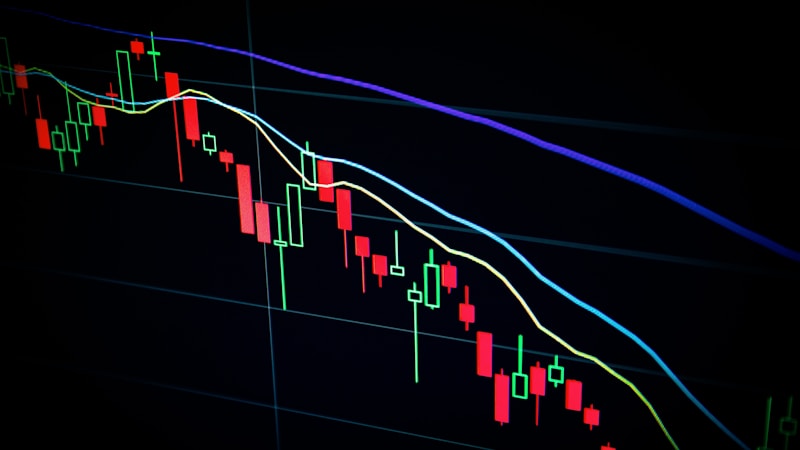
This is why Alyssa said "don't do this" and did it anyway. It's why every experienced trader has a story about chasing a stock they knew was overextended. The rational brain and the emotional brain are running two different programs — and when real money and social pressure are involved, the emotional brain wins almost every time.
Research from Barber, Lee, Liu, and Odean analyzed the accounts of over 800,000 retail traders and found that stocks that retail traders actively bought after large price increases earned negative returns over the following month. In plain English: by the time retail traders pile in, the move is over.
The average FOMO trader doesn't buy at the bottom. They buy at the top. And then they hold, waiting for a continuation that never comes.
FOMO doesn't help you catch the trade. It helps you become exit liquidity for the people who were already in.
The FOMO Cycle: How It Destroys Accounts in Slow Motion.
FOMO doesn't blow up your account in one trade. It does it across dozens — each one feeling urgent, each one feeling like "the last chance," and each one ending the same way:
| The FOMO Cycle | The Result |
|---|---|
| Stock runs 30-50% in a day | You see it on social media |
| Everyone is posting gains | Your anterior insula fires — social pain |
| You buy at the top | Premium is already inflated |
| Stock reverses or stalls | Theta decay accelerates your loss |
| You hold hoping for continuation | Loss deepens daily |
| You sell for a big loss | Next FOMO trade begins tomorrow |
Alyssa went through this cycle five times in four months. Five stocks. Five FOMO entries. Five losses. $17,200 gone.
The cruelest part? Every stock she chased eventually pulled back to a price where a calculated entry would have been profitable. FOMO made her buy at the only price that guaranteed a loss.
The Antidote to FOMO Is Not Discipline. It's an Algorithm.
You cannot discipline your way out of a neurological response. When your ventral striatum is flooding you with dopamine and your anterior insula is punishing you for missing out, "just be patient" is not a viable strategy.
The only antidote is a system that makes entry decisions based on data — not on what's trending on social media, not on what your feed looks like, and not on what your brain's reward centers are screaming at you to do.
That system is DragonAlgo.
DragonAlgo's algorithm doesn't experience FOMO. It doesn't see Twitter screenshots. It doesn't feel social pressure. It processes market data, identifies high-probability setups at calculated entry levels, and sends you an alert — only when the math says the trade has an edge.
If the move has already happened and the risk-reward is unfavorable, the algorithm doesn't send a signal. Period. No chasing. No "load up." No buying at the top because everyone else is.
FOMO trading vs. algorithm-assisted trading:
| FOMO trading | DragonAlgo |
|---|---|
| Buy when it's trending on Twitter | Buy when data confirms an edge |
| Entry at the top of the move | Entry at calculated levels |
| No stop loss — "it'll keep going" | Stop loss on every alert |
| Driven by fear of missing out | Driven by probability and data |
| 5 FOMO trades, 5 losses | Only trades high-probability setups |
Read that again:
The algorithm doesn't chase. It doesn't panic. It doesn't feel left out. And that's exactly why it works when your brain can't.
Trusted by thousands of American traders
What DragonAlgo Members Are Saying
"FOMO was my #1 problem. I'd see a stock running and I couldn't help myself. DragonAlgo broke the cycle because the alerts come to me — I don't go hunting for trades. If there's no alert, there's no trade. It's that simple."
"I used to chase every runner I saw on FinTwit. Lost thousands doing it. Now I only trade what DragonAlgo sends me. The entries are calculated, the risk is defined, and I've stopped buying at the top."
"The best trades are the ones you don't take. DragonAlgo taught me that by only alerting high-probability setups. On the days with no alerts, I used to get antsy. Now I appreciate the discipline."
The Trade You're About to Chase Will Still Be There Tomorrow. Your Account Might Not.
If you've ever opened Twitter, seen a stock up 30%, and immediately felt the urge to buy calls — you know exactly what FOMO feels like. And you probably know how it ends.
You don't need more patience. You need a system that removes the temptation entirely.
- FOMO activates the same neural pathways as physical pain
- Retail traders who chase momentum consistently buy at the top
- Stocks bought after large price increases earn negative returns
- Algorithms don't experience FOMO — they only trade when data confirms an edge
- DragonAlgo sends alerts at calculated levels, not trending levels
- Every alert includes entry, target, and stop loss
- The free alerts take 2 minutes to access
- FOMO is the most expensive emotion in trading — stop paying for it
Alyssa lost $17,200 across five FOMO trades. Every single one felt urgent. Every single one was a loss. An algorithm that doesn't chase could have prevented all of it.
Sources:
Barber, Lee, Liu, Odean — "The Cross-Section of Speculator Skill" | Journal of Behavioral Finance — "FOMO and Retail Trading" | Kuhnen & Knutson — "The Neural Basis of Financial Risk Taking" | DragonAlgo.com


Advertiser Disclosure: This is a sponsored article. MarketWire may receive compensation when you sign up through links in this article. All opinions are our own. Trading options involves substantial risk of loss and is not suitable for all investors. Past performance is not indicative of future results.