
At 43, Daniel Foster had worked for himself his entire adult life. He had never had a boss. He had never taken a salary. He was a freelance videographer based in Atlanta who had built his business through discipline, creativity, and an absolute refusal to work for anyone else.
He was proud of that. He should have been proud of that.
What he was less proud of — what he now talks about with the kind of careful honesty that only comes after real devastation — is what he did with the money his business made.
For most of his career, he had kept his savings in a business checking account. He did not invest. He did not own stocks. He watched the market from a distance and assumed it was for people who had more money, more education, or more time than he did.
Then, in 2022, a client paid him $60,000 for a year-long corporate video contract. The biggest single payday of his career. He bought a new camera rig. He paid off his car. And he had $38,000 left over — more money than he had ever had sitting idle at once.
His friend suggested options trading. Specifically, selling covered calls on dividend stocks. "It's like collecting rent on stocks you already own," the friend explained. "You get paid every week just for owning shares."
Daniel had spent twenty years building a business by himself. He knew how to figure things out. He opened a brokerage account. He deposited the $38,000. He watched eight hours of YouTube videos in a single weekend. He felt ready.
Twenty-two months later, the account was at $4,100.
$38,000 saved over three years of freelancing. $33,900 lost in twenty-two months. The account that was supposed to become his retirement was almost entirely gone.
Source: Federal Reserve — "Survey of Consumer Finances" | SCORE — "Freelancer Financial Health Report"
Why Self-Made People Are Especially Vulnerable to Trading Losses.
Here is the paradox that nobody prepares freelancers and entrepreneurs for:
The exact traits that make someone successful at building their own business — independence, self-reliance, willingness to figure things out alone, high tolerance for uncertainty, confidence in their own judgment — are the exact traits that make options trading dangerous without a system.
Daniel had built his entire career on figuring things out himself. When he did not know how to color grade footage, he watched YouTube videos until he did. When he did not know how to negotiate contracts, he read books and practiced until he mastered it. When a client wanted something he had never done before, he figured it out.
That mindset is extraordinary in a business context. In options trading, without a systematic framework, it is a liability.

Options trading does not reward figuring it out. It rewards following a system that has already been figured out. The moment Daniel began applying freelancer logic to trading — "I will study hard enough, work at it diligently enough, and eventually get better results" — he was already on the path to losing money.
Because the markets do not grade on effort. They do not give credit for YouTube hours watched or research performed. They grade on outcomes. And outcomes in options trading require not just effort but a disciplined, rules-based system for entry, exit, position sizing, and risk management.
Daniel had effort. He did not have a system.
The traits that build businesses do not automatically transfer to trading. And that gap is where accounts go to die.
The Freelancer's Unique Financial Vulnerability.
There is something specific to freelancers and self-employed people that makes trading losses particularly devastating: they have no financial cushion besides what they build themselves.
When Daniel's $38,000 evaporated, he did not have an employer's 401K to fall back on. He did not have a pension. He did not have stock options from a tech company vesting over four years. He had a brokerage account, and then he had almost nothing.
The Federal Reserve's Survey of Consumer Finances consistently shows that self-employed individuals have higher median wealth than salaried workers — but also higher variance. The highs are higher and the lows are lower. And when a freelancer takes a significant financial loss, the recovery path is entirely on their own shoulders.
| Financial safety net comparison | Salaried employee | Freelancer like Daniel |
|---|---|---|
| Employer 401K match | Yes | No |
| Stock vesting / RSUs | Often | Never |
| Defined benefit pension | Some industries | No |
| Unemployment insurance | Yes | No |
| Health benefits | Often employer-paid | Self-funded |
| Financial recovery if market loss | Continues building automatically | Entirely on their own |
Daniel's $38,000 was not just a trading account. It was his emergency fund, his retirement savings, his insurance against a slow work month, and his future — all in one place. When he lost $33,900 of it, he did not just lose money. He lost his financial resilience entirely.
What the "Covered Call Income" Strategy Actually Looks Like When It Goes Wrong.
The strategy Daniel was taught — selling covered calls to "collect rent" on stocks he owned — sounds safe. In a flat or mildly bullish market, it generates consistent small premiums. It feels like a business: show up, do the work, collect payment.
What his friend did not tell him — what the YouTube videos he watched did not tell him — is what happens when the underlying stocks drop significantly. He was selling calls on individual stocks, which meant he owned those stocks. When the market corrected in 2022, his stocks dropped 20, 30, even 40 percent. The calls he sold generated $300 a week in premiums. The stocks he owned lost $4,000 per week in value.
He kept selling calls. He was told this was the strategy. He kept collecting premiums. The premiums were real. The losses in the underlying were real and far larger.
By the time he understood what was happening, he had collected approximately $9,000 in total premiums over twenty-two months and lost approximately $43,000 in the underlying stocks' value. The net result: a $34,000 loss that he had partially funded with his own "income" strategy.
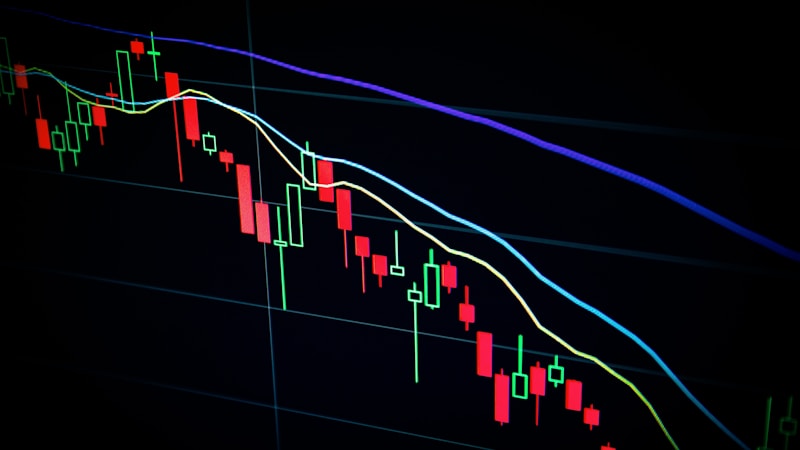
The premiums were real. The losses were realer. And without a system to manage the downside, collecting premiums is just a slow way to watch your account disappear.
The System That Protects Freelancer Capital. It Costs Nothing to Try.
The tool that defines risk before entry — the one that sends you high-probability alerts without requiring you to build an entire trading methodology from scratch through expensive trial and error — is available free right now.
It is called DragonAlgo.
For freelancers and self-employed traders specifically, DragonAlgo solves two problems simultaneously. First, it provides the systematic framework you cannot build through YouTube videos alone. Second, it protects your capital with defined-risk alerts — every trade has a stop loss, every trade has a target, and you know your maximum possible loss before you ever click "buy."
For someone like Daniel, whose savings represent years of independent work and serve as his own safety net, that defined risk is not just a trading feature. It is financial protection for everything he has built.
| Daniel's approach | With DragonAlgo |
|---|---|
| Built strategy from YouTube alone | Proprietary quantitative signals |
| Collected small premiums, ignored large losses | Defined risk on every alert |
| No exit plan when market dropped | Stop loss built into every trade |
| $9K premiums collected, $43K in losses | Maximum loss known before entry |
| No financial safety net left | Capital protected by systematic risk rules |
Read that again:
The money you saved by working for yourself, by taking every difficult client, by grinding through slow months — that money deserves protection that your own judgment alone cannot provide. That is what a system does.
Trusted by thousands of American traders
What DragonAlgo Members Are Saying
"I am self-employed and every dollar I have, I earned myself. There is no employer 401K, no safety net. I learned the hard way that the same work ethic that builds a business does not automatically build a trading account. DragonAlgo gave me the system I could not build myself. My capital is finally protected."
"As a freelancer, my savings are everything. I cannot afford to lose them and wait for a paycheck to recover. DragonAlgo's defined risk on every trade means I know my worst-case scenario before I enter. For the first time, I feel like I am actually managing risk instead of hoping for the best."
"I spent two years trying to figure out trading by myself. That is how I approach everything in business — I just figure it out. But trading does not work that way. You need a system, not just effort. DragonAlgo is that system. I wish I had found it before I lost $28,000 figuring it out alone."
"I Am Good at Figuring Things Out on My Own."
Yes. You probably are. That is why you chose to work for yourself in the first place.
But options trading does not reward the learning process the way building a business does. In business, every mistake you make is a tuition payment that makes you better at your craft. In options trading, every mistake you make comes directly out of your savings — and you do not always get to stay in the game long enough to apply the lessons.
Daniel figured out videography. He figured out client management. He figured out running a business. And he lost $33,900 trying to figure out options trading on his own — money that took three years of hard work to accumulate.
- Freelancers have no employer safety net — every dollar lost is irreplaceable
- The traits that build businesses can actually make trading more dangerous
- Options trading does not reward effort — it rewards systematic execution
- "Income strategies" like covered calls carry hidden catastrophic downside risk
- DragonAlgo provides the system that years of YouTube cannot replace
- Every alert includes entry, target, and defined maximum risk
- The free alerts take 2 minutes to access
- Your savings represent years of independent work — protect them with a system
Daniel spent three years earning $38,000. He spent twenty-two months losing $33,900 of it trying to figure out trading by himself. A system with defined risk could have protected every dollar he earned. Access the free alerts before you pay the same tuition.
Sources:
Federal Reserve — "Survey of Consumer Finances" | SCORE — "Freelancer Financial Health Report" | Barber & Odean — "Do Individual Investors Trade Too Much?" | DragonAlgo.com


Advertiser Disclosure: This is a sponsored article. MarketWire may receive compensation when you sign up through links in this article. All opinions are our own. Trading options involves substantial risk of loss and is not suitable for all investors. Past performance is not indicative of future results.