
It started with a $6,000 loss on a Monday morning.
David Park had been trading options profitably for over a decade. He'd survived the 2020 crash. He'd navigated the meme stock mania without getting burned. He had a strategy he trusted — mostly selling premium on index ETFs — and it had built his account to just over $340,000.
Then one Monday, the market gapped down hard on unexpected Fed commentary. His short puts on QQQ went deep in the money. By 10:30 AM, he was down $6,200.
Not a catastrophic loss. Not even unusual for his account size. But something snapped.
He decided to make it back. Immediately.
Instead of following his rules — which said to take the loss and reassess — David did what every trading psychologist warns against. He sized up. He flipped direction. He bought aggressive weekly calls on TSLA, convinced the sell-off was overdone.
The market kept dropping.
By Tuesday afternoon, the $6,200 loss had become $28,000. He doubled down. By Wednesday close, he was down $74,000. He couldn't sleep. He couldn't eat. He couldn't think about anything else.
On Thursday morning, in what he later called "a complete blackout of rational thought," he put the remaining balance of his account into 0DTE SPX puts — betting the market would crash.
It rallied. And by Friday at 4 PM, David's account — the one he'd spent ten years building to $340,000 — was at $138,000.
$202,000 gone. In five days.
He called it "the most destructive week of my life."
Source: FINRA — "The Psychology of Trading Losses" | American Psychological Association — "Decision-Making Under Stress"
The Anatomy of a Revenge Trade.
Here's what actually happens in your brain when you take a loss:
The amygdala — the part of your brain responsible for fear and aggression — activates. Cortisol floods your system. Your prefrontal cortex, which handles rational decision-making, gets suppressed.
In plain English: you get dumber the moment you lose money.

This is why revenge trading is so dangerous. It happens precisely when your brain is least equipped to make good decisions. You're not trading a market thesis anymore. You're trading an emotion: the desperate need to undo what just happened.
And it almost always makes things worse.
A study published in the Journal of Behavioral Finance found that traders who immediately re-enter the market after a loss take on 35% more risk and achieve significantly worse outcomes than traders who pause.
David wasn't stupid. He wasn't a beginner. He had a decade of experience. But in the moment, his brain hijacked his strategy. His emotions overrode his rules.
This is what experience without a system looks like.
The $202,000 Question: What Would Have Saved Him?
David asked himself this question every day for months after the disaster.
More discipline? He'd thought he had it. More experience? He'd had a decade. A better strategy? His strategy had worked for years.
The answer, he eventually realized, was simpler and harder to accept:
He needed a system that would trade for him when he couldn't trust himself to trade.
Not a set of rules he could override. Not a checklist he could ignore. An actual external signal — generated by math, not emotion — that would tell him what to do, when to enter, and most critically, when to stop.
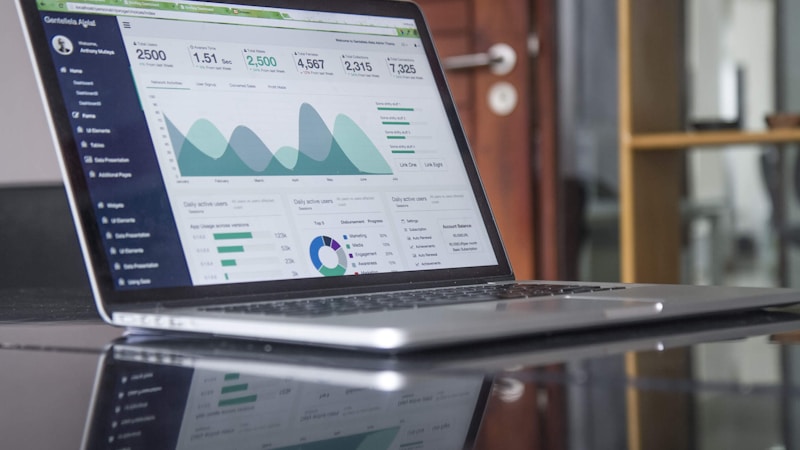
An algorithm doesn't feel the sting of a loss. It doesn't decide to "make it back." It doesn't double down out of anger. It doesn't stay up until 3 AM staring at futures charts, convinced tomorrow will be different.
An algorithm simply processes data and outputs a decision. Entry. Target. Stop loss. That's it.
The System That Prevents the Revenge Trade. It Costs $0 to Try.
The tool that would have prevented David's $202,000 disaster — the one that removes emotion from every single trade decision — is available for free right now.
It's called DragonAlgo.
DragonAlgo is a proprietary options trading algorithm that sends you real-time alerts with exact entries, targets, and stop losses. It doesn't know what you lost yesterday. It doesn't care. It only knows what the data says right now.
Here's what David's week would have looked like with DragonAlgo:
| What David did | What DragonAlgo would have done |
|---|---|
| Took a $6K loss, panicked | Took the loss, waited for next signal |
| Flipped direction on emotion | No signal = no trade |
| Doubled position size | Consistent sizing on every alert |
| Ignored stop losses | Stop loss built into every alert |
| Put everything in 0DTE options | Only trades high-probability setups |
| Lost $202,000 in 5 days | Maximum loss defined before entry |
Read that again:
The algorithm doesn't revenge trade. It doesn't double down. It doesn't feel. And that's exactly why it works.
Trusted by thousands of American traders
What DragonAlgo Members Are Saying
"Revenge trading nearly ended my career. I'd lose $2K and then lose $10K trying to make it back. DragonAlgo broke that cycle completely. When I take a loss now, I just wait for the next alert. No emotion. No spiral."
"The stop losses alone saved my account. I used to move them, widen them, remove them entirely when I was emotional. Now the algorithm sets the stop and I just follow it. My worst week with DragonAlgo is better than my average week without it."
"It Won't Happen to Me."
That's what David thought too. For ten years.
Revenge trading doesn't announce itself. You don't wake up and decide to blow up your account. It happens in the moment — when your brain is flooded with cortisol and your prefrontal cortex goes offline.
The only defense is a system that operates outside your emotions. One that makes decisions based on data, not on what happened in the last trade.
David didn't have it. Now he does.
You still have the chance to set it up. It takes 2 minutes. It costs $0 to start.
- Revenge trading is the #1 destroyer of profitable accounts
- It happens when your brain is least equipped to make decisions
- Experience alone cannot protect you — David had 10 years
- The only defense is a system that doesn't feel emotion
- DragonAlgo sends alerts with built-in entries and stop losses
- The free alerts take 2 minutes to access
- Once the spiral begins, it's too late to find a system
David wishes he'd had a system before that Monday morning. You still can. Don't wait for your $200,000 lesson.
Sources:
FINRA — "The Psychology of Trading Losses" | Journal of Behavioral Finance — "Post-Loss Risk Taking" | American Psychological Association — "Decision-Making Under Stress" | DragonAlgo.com


Advertiser Disclosure: This is a sponsored article. MarketWire may receive compensation when you sign up through links in this article. All opinions are our own. Trading options involves substantial risk of loss and is not suitable for all investors. Past performance is not indicative of future results.