
It was a Saturday morning when Angela Reeves sat down at her kitchen table with a cup of coffee and opened her brokerage app for the first time in three weeks.
She had been avoiding it. Not because she was busy — she had been a seventh-grade math teacher for nineteen years and summers were slow. She had been avoiding it because somewhere in the back of her mind, she already knew what she was going to see.
The app loaded. Her account balance flashed across the screen.
$9,241.
Fourteen months earlier, that account had held $82,000 — her entire life savings, accumulated over two decades of $35,000 annual salaries, aggressive saving, and the kind of quiet, stubborn financial discipline that never gets celebrated but defines an entire life.
She set the coffee down. She did not cry. She just sat there for a long time, looking at the number, doing the math she had spent her career teaching other people to do.
$82,000 minus $72,759 in losses equals $9,241.
She described what happened next as "the worst silence I have ever experienced. Nineteen years of saving. Gone in fourteen months. And the worst part was that I thought I was being smart."
Angela was not reckless. She was not impulsive. She was a math teacher who thought that understanding numbers meant she understood markets. She was wrong about both.
Nineteen years of savings. Fourteen months of trading. $72,759 gone.
Source: SEC — "Retail Investor Risk Study" | Journal of Economic Behavior — "Financial Literacy and Investment Performance"
How a Math Teacher Who Understood Numbers Lost Everything She Had Saved.
Here is how it started — and how it always starts:
Angela's brother-in-law made $14,000 trading options during the 2021 bull run. He talked about it constantly at Thanksgiving. He made it sound effortless. Buy calls on the stocks you believe in, wait for them to go up, sell for a profit. Simple.
Angela had always been conservative with her money. Savings accounts, index funds, slow and steady. But watching her brother-in-law double his account in six months while her index funds returned 12% planted a seed she could not ignore.
She opened an account. She deposited $10,000 as a test. She bought calls on Apple. Apple went up. Her calls doubled. She made $4,200 in three weeks.
"I felt like I had been leaving money on the table my entire life," she said. "I am a math teacher. I understand ratios and percentages. I thought I had an advantage other people did not."
She transferred $40,000 more into the account. Then three months later, another $32,000. By month six, her entire life savings was in the brokerage account.
She had no trading system. No stop losses. No position sizing rules. She traded on conviction — buying calls on companies she believed in, puts on companies she did not. She studied charts on YouTube. She felt, genuinely and deeply, that she understood what she was doing.

The market did not care about her conviction. It did not care about her nineteen years of financial discipline. Options trading does not reward understanding. It rewards systematic execution. And Angela had understanding without execution.
The losses started small. $800 on a NFLX put that expired worthless. $1,400 on a Meta call held through earnings. $3,200 on a biotech play a colleague had mentioned. Each loss was explained away. Each loss was a learning experience. Each loss was followed by a bigger bet to make it back.
The losses were not random. They followed a pattern. And the pattern was always the same: knowledge without a system.
The Gap Nobody Tells You About: Between Understanding and Execution.
Angela knew what theta decay was. She could explain it to you. She understood that options lose value every day they are held. She knew all of this. And she still lost $72,759.
This is the gap that destroys educated retail traders: the gap between knowing what to do and actually doing it when real money is at stake and your brain's threat-detection system is running at full capacity.
When her NFLX position was down $1,400 — money she had saved by brown-bagging her lunch for a year — she could not cut it. She froze. She held. It expired worthless.
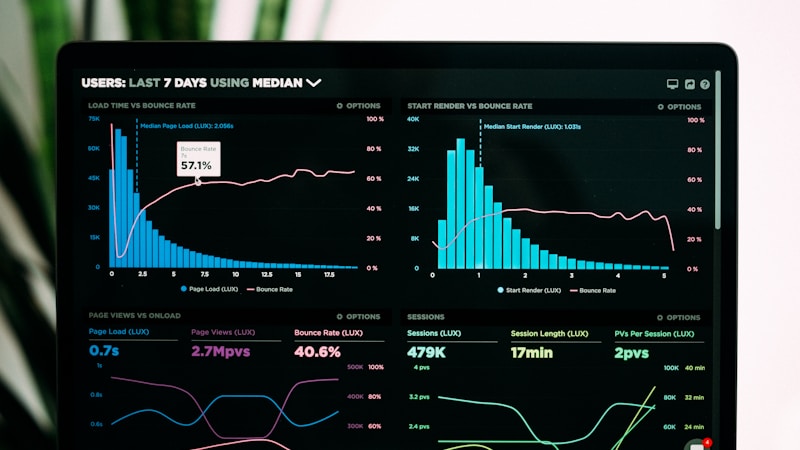
A study published in the Journal of Economic Behavior found that financial literacy has almost no correlation with trading performance among retail investors. The traders who know the most are not the traders who make the most. In many cases, they are the traders who lose the most — because knowledge creates overconfidence without creating discipline.
The professionals who consistently make money in options markets are not more educated than Angela. What they have is a system that removes emotion from the execution process. They do not decide whether to cut a loss. The system decides. They do not decide when to enter. The signal decides. They do not decide when to exit. The algorithm decides.
Angela used her brain where she should have used a system. And in options trading, your brain — no matter how educated, no matter how disciplined in other areas of your life — is the last tool you want in charge of execution.
The Real Cost of Trading Without a System.
Angela's $72,759 loss is not just a number. Here is what that money actually represented:
| What Angela saved | Time it took |
|---|---|
| $82,000 total savings | 19 years of teaching |
| First $10,000 | ~3 years of careful saving |
| Additional $72,000 lost | ~17 years of disciplined living |
| Account after 14 months trading | $9,241 — nearly everything gone |
Seventeen years of saving. Fourteen months of trading. There is no combination of words that makes this outcome acceptable.
And Angela is not an outlier. The SEC study on retail trading found that individual options traders, on average, lose money. The distribution of outcomes skews heavily negative, particularly for traders without defined systems or risk management frameworks.
Angela had discipline in every area of her financial life except trading. She never carried credit card debt. She drove a ten-year-old car. She brought lunch to work every single day. And then she put every dollar she had accumulated into a trading account with no system, no stop losses, and no protection.
All the discipline in the world means nothing if you are executing without a framework.
The System That Would Have Protected Angela's Life Savings. It Costs Nothing to Try.
This is the part of the story that Angela finds hardest to hear — because it is the simplest part.
The system that would have protected her savings — the one that removes emotional execution from the trading process and replaces it with data-driven signals — is available free right now.
It is called DragonAlgo.
DragonAlgo is a proprietary options trading algorithm that does what Angela's educated, disciplined, well-meaning brain could not: it scans market conditions without emotion, identifies high-probability setups without conviction bias, and delivers real-time alerts with exact entries, targets, and stop losses.
The algorithm does not care that you believe in Apple. It does not care that you have used their products for ten years. It processes the data — the volatility patterns, the momentum signals, the technical indicators — and it generates a signal based on that data, not on your feelings about the company.
And critically: when the trade hits the stop loss, it is over. The algorithm does not know you have held this position for three weeks. It does not know that selling means realizing a loss. It generates the exit signal based on data, and you follow it. That is the whole system.
Here is what Angela's trading would have looked like with DragonAlgo:
| What Angela did without a system | What DragonAlgo provides |
|---|---|
| Traded on conviction about companies | Trades on quantitative data signals |
| No stop losses on any position | Stop loss defined on every single alert |
| Held losers hoping for recovery | Exit signal removes hope from the equation |
| Knowledge without execution | No knowledge required — follow the alert |
| Lost 19 years of savings in 14 months | Maximum loss defined before entry |
| No system to override emotion | Algorithm overrides emotion every time |
Read that again:
You do not need more knowledge. Angela had plenty of knowledge. You need a system that executes without emotion. That is what DragonAlgo is.
Let us put this in perspective:
| What you are protecting | What it costs to try |
|---|---|
| Your retirement savings | Free |
| Your years of discipline | Free |
| Your financial security | Free |
| Everything you have built | Free |
There is no universe where this math does not make sense.
Trusted by thousands of American traders
This Is for You If You Have Ever:
📚 Studied trading extensively but still lost money
💸 Held a losing position because you "believed" in the stock
📊 Understood options theory but could not execute discipline
😔 Watched months of gains disappear in days
🔒 Traded without stop losses because you "knew" it would recover
💡 Thought your financial discipline would protect you in markets
If any of these describe you — you are Angela's story waiting to happen. The gap between knowing and doing is where accounts go to die. The only bridge across that gap is a system that does the doing for you.
What DragonAlgo Members Are Saying
"I am an engineer. I understood options pricing models better than most retail traders. I still lost $40,000 because I could not execute discipline under pressure. DragonAlgo removed me from the equation entirely. The alert tells me what to do. I do it. My results have never been better."
"I researched every trade for hours. Reading 10-Ks, listening to earnings calls, building spreadsheets. I was working harder than most fund managers. And I was losing money. DragonAlgo showed me that effort is not the same as edge. The algorithm has the edge. I just follow the signal."
"The stop losses saved me. I always knew I should cut losers but could never do it. With DragonAlgo, the stop is built into the alert — it is not a decision I have to make. That one change made me a completely different trader."
"I Will Figure It Out Eventually."
That is what Angela told herself after the first $5,000 loss. And the second. And the third. She was a math teacher — she would figure out the math of trading. It was just a matter of time and study.
Fourteen months and $72,759 later, she understood something no amount of study would have taught her: trading is not a knowledge problem. It is an execution problem. And you cannot discipline your way to better execution when your brain is working against you.
The only solution is a system that executes for you. One that does not know your history with a stock. One that does not feel the pain of a loss. One that generates signals based on data and sends them to your phone — already optimized, already risk-managed, already ready to act on.
Angela did not have it. Now she does. But her $72,759 is gone.
You still have the chance to set it up before your losses compound. It takes 2 minutes. It costs nothing.
Let's Make This Simple:
- Financial literacy has almost no correlation with trading performance
- Knowledge without a system creates overconfidence, not results
- The gap between knowing and executing is where accounts are destroyed
- Angela lost 19 years of savings because she executed on emotion, not data
- DragonAlgo removes emotion — every alert includes entry, target, and stop loss
- You cannot discipline your way out of a neurological response to loss
- The free alerts take 2 minutes to access — before the next loss compounds
- Once the savings are gone, nineteen years does not come back
Angela spent nineteen years building $82,000 and fourteen months losing $72,759 of it. A system that removes emotion from execution could have protected every dollar. Do not wait until you are looking at your own number on a Saturday morning.
Sources:
SEC — "Retail Investor Risk Study" | Journal of Economic Behavior — "Financial Literacy and Investment Performance" | TIAA — "Teacher Retirement and Financial Security" | Barber & Odean — "Trading Is Hazardous to Your Wealth" | DragonAlgo.com


Advertiser Disclosure: This is a sponsored article. MarketWire may receive compensation when you sign up through links in this article. All opinions are our own. Trading options involves substantial risk of loss and is not suitable for all investors. Past performance is not indicative of future results.