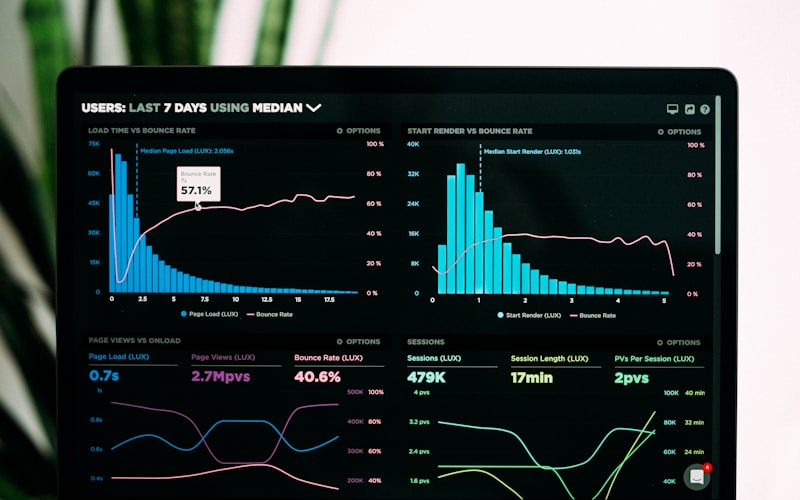
Ben Ashworth had RSI, MACD, Bollinger Bands, VWAP, EMA 9, EMA 21, EMA 50, EMA 200, volume profile, Fibonacci retracement, stochastic oscillator, ATR, OBV, and Ichimoku Cloud all on one chart. He still couldn't decide when to buy.
His TradingView chart looked like a Jackson Pollock painting. Every square inch was covered in lines, bands, histograms, and overlays. He'd spent months customizing it — adjusting colors, tweaking settings, adding one more indicator every time a YouTube video convinced him it was "the missing piece."
The result? Paralysis.
On any given morning, three indicators said buy, four said sell, three said wait, and the remaining four were ambiguous. He'd stare at the chart for 45 minutes, watching indicators flash contradictory signals, and end up doing one of two things: nothing (missing trades that would have been profitable) or everything (entering impulsively out of frustration and losing money).
Over eight months, he estimated he missed about $18,000 in potential gains from trades he identified but couldn't pull the trigger on — and lost about $12,000 on trades where he entered out of frustration after staring at his chart too long.
14 indicators. Zero clarity. $30,000 in missed and lost opportunities.
"I had so much information that I had no information," he said. "Every indicator cancelled out every other indicator. I was drowning in data and starving for a decision."
Source: Schwager — "Market Wizards" | Kahneman — "Thinking, Fast and Slow" | Journal of Finance — "Information Overload in Trading"
The Indicator Trap: Why More Information Produces Worse Decisions.
Here's what decades of decision-science research tells us:
Human decision-making quality peaks with 3-5 inputs. Beyond that, every additional input doesn't improve accuracy — it increases confusion, hesitation, and cognitive overload. This is true in medicine, military strategy, venture capital, and trading.
Ben had 14 inputs. He was operating at roughly three times the optimal cognitive load. Every additional indicator didn't add clarity — it added noise. And noise, in trading, is indistinguishable from signal.
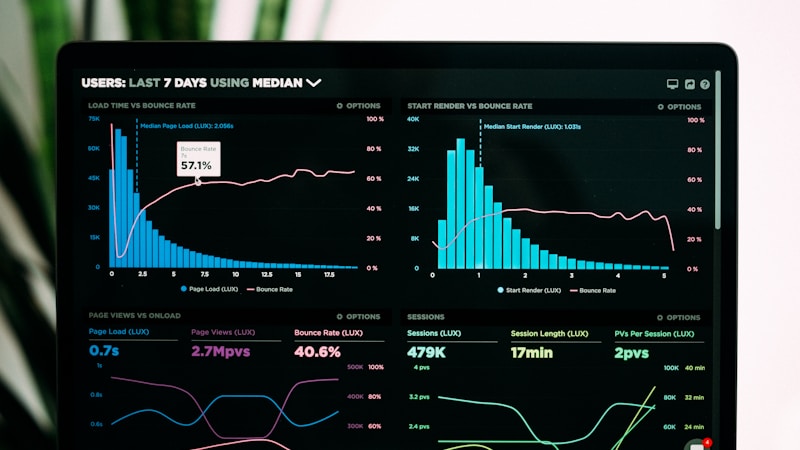
The reason is mathematical: most popular indicators are derived from the same underlying data — price and volume. MACD, RSI, stochastic, and moving averages are all transformations of price. They are not independent signals. They're the same signal viewed through different lenses. Having all 14 doesn't give you 14 independent opinions. It gives you roughly 3-4 opinions expressed in 14 different ways.
But your brain doesn't know that. Your brain sees 14 indicators and processes them as 14 separate data points — each one adding weight to the decision, each one pulling in a slightly different direction, each one creating another reason to hesitate.
Jack Schwager, in his interviews with top traders for "Market Wizards," found that the most consistently profitable traders used the fewest indicators — often just one or two, combined with price action and volume. Simplicity, not complexity, correlated with returns.
The best traders don't have more information. They have better filters.
Analysis Paralysis vs. Algorithmic Clarity.
| Ben's 14 indicators | DragonAlgo's algorithm |
|---|---|
| 14 contradictory signals | One clear alert |
| 45 minutes staring at charts | Alert arrives on your phone |
| Paralysis → missed trades | Signal → execution |
| Frustration → impulsive entries | Calculated entry on every alert |
| No defined exits | Target and stop on every trade |
Replace 14 Indicators With One Signal. It Costs $0.
The tool that replaces the noise of 14 contradictory indicators with a single, clear, data-driven trade alert — is available for free right now.
It's called DragonAlgo.
DragonAlgo's algorithm processes the same data your 14 indicators are trying to interpret — but it does it in milliseconds, without contradiction, and outputs a single decision: trade or don't trade. If trade, here's the entry. Here's the target. Here's the stop. Execute or pass. That's it.
No staring at charts. No conflicting signals. No paralysis. No frustration entries. Just clarity.
Trusted by thousands of American traders
What DragonAlgo Members Are Saying
"I had so many indicators on my chart I couldn't even see the candlesticks anymore. DragonAlgo replaced all of them with one clean alert. Entry. Target. Stop. I don't even open TradingView anymore."
"Analysis paralysis was my #1 problem. I'd see the setup, hesitate for 20 minutes, and by the time I entered the move was over. Now the algorithm makes the decision. I just execute. My speed and confidence are completely different."
Simplicity Wins. Complexity Kills.
- Decision quality peaks at 3-5 inputs — beyond that, more data = more confusion
- Most indicators are derived from the same underlying data — they are not independent
- The most profitable traders use fewer indicators, not more
- Analysis paralysis causes both missed trades and impulsive entries
- DragonAlgo replaces contradictory indicators with one clear signal
- Every alert includes entry, target, and stop loss
- The free alerts take 2 minutes to access
Ben spent eight months drowning in data. 14 indicators. Zero decisions. $30,000 in missed and lost opportunities. One algorithm could have replaced all of it. Try it free.
Sources:
Schwager — "Market Wizards" | Kahneman — "Thinking, Fast and Slow" | Journal of Finance — "Information Overload in Trading" | DragonAlgo.com


Advertiser Disclosure: This is a sponsored article. MarketWire may receive compensation when you sign up through links in this article. All opinions are our own. Trading options involves substantial risk of loss and is not suitable for all investors. Past performance is not indicative of future results.