
In January 2024, Michael Tran deposited $5,000 into a Webull account. By August, it was worth $103,000.
He'd done it entirely with options. Weekly calls on NVDA during the AI rally. Puts on regional banks during the SVB fallout. A perfectly timed straddle on Tesla earnings that doubled in 48 hours.
He quit his job in June. He told his friends he'd "figured out" the market. He started an Instagram account where he posted screenshots of his account balance. He bought a new car. He was 26 years old and felt invincible.
"I thought I was a genius," he said later. "I thought I'd found the cheat code."
His strategy — if you could call it that — was simple: find the stock everyone was talking about, buy weekly options in the direction of the trend, and hold until they doubled or expired. No stop losses. No position sizing rules. No risk management whatsoever.
It worked. Until it didn't.
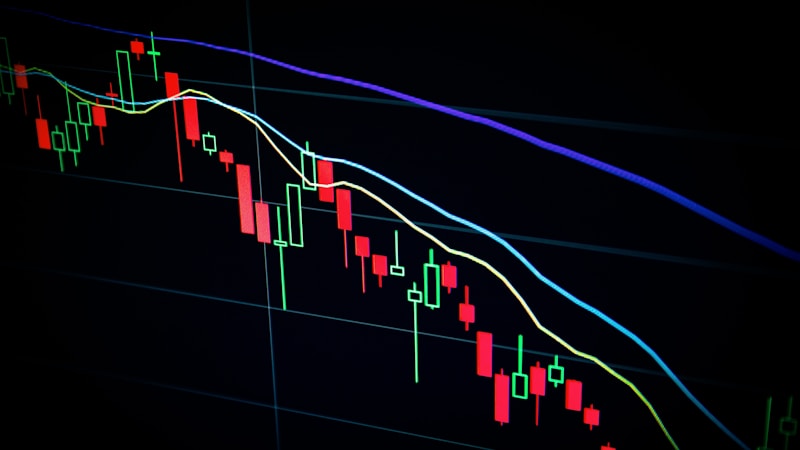
In September, the market corrected. The AI trade reversed. NVDA dropped 15% in two weeks. Michael's calls — heavily concentrated, no hedges — lost 70% of their value.
He didn't sell. "It always bounces back," he told himself. He'd seen dips before. They were buying opportunities.
He bought more calls. The market kept dropping.
By October, his $103,000 account was at $41,000. He was rattled but not panicked. He still had $41K. He could make it back.
So he did what every overconfident trader does when their thesis is failing: he increased his risk. He moved from weekly options to 0DTE options — same-day expiration contracts that could double in minutes or go to zero.
Three weeks of 0DTE trading. Three weeks of losses interrupted by small wins that kept him going just long enough to lose more.
By November, his account was at $2,100.
$5,000 → $103,000 → $2,100. The entire round trip in eleven months.
He described the experience as "the most humiliating thing I've ever been through. I had to ask my parents for rent money. I had to return the car."
Source: SEC — "Investor Bulletin: Risks of Short-Term Trading" | Journal of Finance — "Overconfidence and Trading Volume"
The Winning Streak Is the Trap.
Here's what nobody tells new traders about early success:
When you win your first ten trades, your brain doesn't think "I got lucky." Your brain thinks "I'm skilled." This is a well-documented cognitive bias called the illusion of control — and in trading, it's lethal.
The illusion of control convinces you that you have an edge when you don't. That your "reads" are correct when they're just correlated with a bull market. That your strategy works when, in reality, the market was simply going up and you happened to be buying calls.
Research from the Journal of Finance by Barber and Odean found that traders who experienced early gains traded 50% more frequently and took on significantly more risk than traders who experienced early losses. The winners didn't become better traders. They became more reckless ones.
Michael wasn't profitable because he was good. He was profitable because the AI rally was carrying everything higher. The moment the tide turned, his lack of a system was exposed — and a year of gains evaporated in weeks.
A rising market makes everyone feel like a genius. A falling market reveals who actually has a system.
The Numbers Are Devastating. And They Follow a Pattern.
Michael's story isn't unusual. It's the template. Academic research has documented the exact same rise-and-fall pattern across thousands of retail trading accounts:
| Phase | What happens |
|---|---|
| 1. Early wins | Market conditions or luck produce gains |
| 2. Overconfidence | Trader attributes luck to skill |
| 3. Risk escalation | Position sizes increase, stops disappear |
| 4. Market shift | Conditions change; strategy stops working |
| 5. Denial | "It'll bounce back" — losses compound |
| 6. Desperation | Increasingly aggressive trades to recover |
| 7. Wipeout | Account balance returns to starting point or below |
Every phase is predictable. Every phase is preventable. And every phase is driven by the same thing: emotion overriding data.
What Would Have Kept the $103,000 Alive? A System.
Here's what makes Michael's story so painful: he actually did have a $103,000 account. The money was real. The gains were real. But without a system to protect them, they were never secure.
An algorithm doesn't feel invincible after a winning streak. It doesn't increase risk because "everything I touch turns to gold." It doesn't abandon stop losses because "it'll bounce back." It processes the same data with the same rules regardless of whether the last trade was a winner or a loser.
If Michael had been using DragonAlgo during his run, here's what would have been different:
| What Michael did | What DragonAlgo does |
|---|---|
| No stop losses — ever | Stop loss on every single trade |
| 100% concentrated in one sector | Signals across market conditions |
| Sized up after wins | Consistent position sizing |
| Held losers hoping for bounce | Exit signal when data says exit |
| Moved to 0DTE in desperation | Only high-probability setups |
| $103K → $2K in 3 months | Defined risk preserves capital |
Read that again:
He had $103,000. A system with stop losses on every trade could have preserved the vast majority of it. Instead, he lost everything because his emotions had no guardrails.
The System That Protects Gains — Not Just From the Market, but From You. It Costs $0.
This is the part that should make you sit up.
The system that would have protected Michael's gains from his own overconfidence — the one that treats a $103,000 account with the same disciplined risk management as a $5,000 account — is available for free right now.
It's called DragonAlgo.
DragonAlgo is a proprietary options trading algorithm that sends you real-time alerts with exact entries, targets, and stop losses. It doesn't know whether your last ten trades were winners. It doesn't care. It processes market data and outputs a signal — no ego, no overconfidence, no escalating risk.
It's the system that keeps your gains safe from the most dangerous trader in the room: you.
Here's the simple version of what it does:
The most important thing DragonAlgo does is remove you from the decision-making process when your judgment is most compromised. After a winning streak, you feel invincible — the algorithm doesn't. After a losing streak, you feel desperate — the algorithm doesn't. It's the same signal, the same rules, the same risk parameters whether your account is up 2,000% or down 50%.
When DragonAlgo identifies a high-probability setup, it sends you an alert. You execute the trade. The algorithm has already calculated the entry, target, and stop loss. Your risk is defined before you click "buy."
And when the trade hits the stop? It's over. No negotiation. No "it'll bounce back." No moving the goalposts.
You will not lose a year of gains in three weeks. You will not escalate to 0DTE trades out of desperation. You will not watch $103,000 become $2,100.
Read that again:
You will not lose a year of gains. You will not escalate risk. You will not watch it all disappear.
Let's put that in perspective:
| What you're protecting | What it costs |
|---|---|
| Your gains | Free |
| Your savings | Free |
| Your confidence | Free |
| Your future | Free |
There is no universe where this math doesn't make sense.
Trusted by thousands of American traders
This Is for You If You've Ever:
📈 Had a winning streak and felt untouchable
💥 Watched gains evaporate in days
🔄 Increased risk after a series of wins
😤 Refused to sell a loser because "it'll come back"
⚡ Moved to riskier trades to recover losses
🏦 Lost more than you ever thought possible
If any of these sound familiar — you are Michael's story waiting to happen. The only difference is whether you have a system in place before the market turns.
What DragonAlgo Members Are Saying
"I turned $8K into $67K and then lost $52K of it in a month. Same story as this article — I thought I was a genius, I sized up, and the market humbled me. DragonAlgo is the system I wish I'd had before the drawdown. Defined risk on every trade. No more ego. No more gambling."
"The stop losses are everything. When I was up big, I stopped using stops because I felt invincible. That's what killed me. DragonAlgo puts the stop on every alert — I can't remove it, I can't negotiate with it. That discipline has saved me thousands."
"What I love most is consistency. When I was trading on my own, my risk was all over the place — small bets when nervous, huge bets when confident. DragonAlgo keeps every trade the same size, same rules, same process. That's what consistency looks like."
"I'll Be More Disciplined Next Time."
That's what every trader says after a blowup. And it's what every trader believes — until the next winning streak activates the same overconfidence cycle.
You cannot discipline your way out of a neurological response. Your brain is wired to increase risk after wins and make desperate decisions after losses. This isn't a character flaw. It's biology.
The only solution is a system that operates outside your biology. One that makes decisions based on data, not on how your last trade made you feel.
Michael didn't have it. The $103,000 is gone.
You still have the chance to set it up. It takes 2 minutes. It costs nothing.
Let's Make This Simple:
- Early success creates a dangerous illusion of skill
- Traders who win early trade more and take on more risk
- The overconfidence cycle is neurological — discipline alone can't fix it
- Without a system, gains are never secure — only temporary
- DragonAlgo removes overconfidence with consistent, rules-based signals
- Every alert includes entry, target, and stop loss
- The free alerts take 2 minutes to access
- Once your gains are gone, they're gone
Michael wishes he'd had a system at $103,000 instead of at $2,100. You still have your gains. Don't let overconfidence take them.
Sources:
Barber & Odean — "Overconfidence and Trading Volume" | SEC — "Investor Bulletin: Risks of Short-Term Trading" | Journal of Finance — "The Illusion of Control in Financial Markets" | Kahneman — "Thinking, Fast and Slow" | DragonAlgo.com


Advertiser Disclosure: This is a sponsored article. MarketWire may receive compensation when you sign up through links in this article. All opinions are our own. Trading options involves substantial risk of loss and is not suitable for all investors. Past performance is not indicative of future results.